
The Origins of Krav Maga — From Bratislava Street Violence to a Global Self-Defence System
Krav Maga was developed by Imi Lichtenfeld in Bratislava in the late 1930s as a direct response to real street violence, not as a sport or martial tradition. His most senior student, Eyal Yanilov, later helped structure and expand the civilian system now taught worldwide through Krav Maga Global, and KMG New Zealand operates within that same international lineage and curriculum.
Understanding where Krav Maga came from matters because the origin story explains why the system is designed the way it is. It tells you why practicality matters so much, why certain principles are non-negotiable, and why Krav Maga feels different from systems that developed in a sporting or traditional context.
Everything in the KMG curriculum traces back to a single question: does this actually work against a real, uncooperative, dangerous opponent? That question was born in Bratislava in the 1930s, and it still shapes the system today.
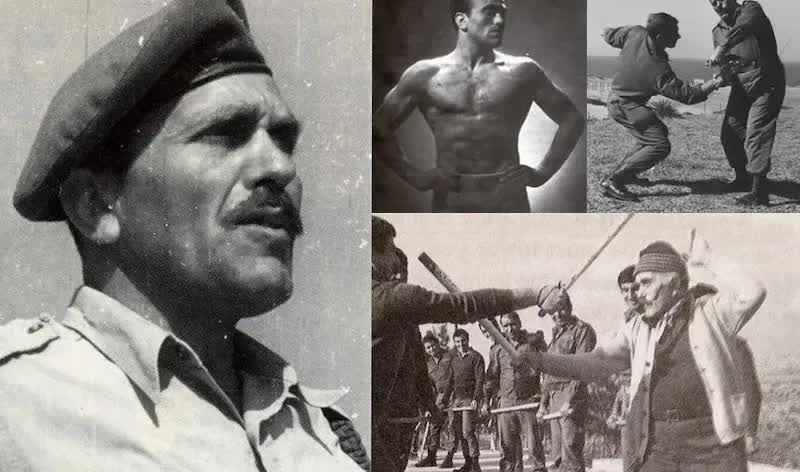
Imi Lichtenfeld — founder of Krav Maga.
Where did Krav Maga actually begin?
Imi Lichtenfeld grew up in Bratislava, in what is now Slovakia, in a family with deep roots in physical culture. His father Samuel was a detective, physical educator, and wrestler who ran a local gym. Imi followed that path early, becoming highly accomplished in wrestling, boxing, and gymnastics.
In the mid-1930s, as fascist groups began attacking Jewish communities in Bratislava, Lichtenfeld helped defend his neighbourhood. What he discovered quickly changed his understanding of fighting: sport technique did not transfer cleanly to street violence. Competition is structured, rule-bound, and between consenting participants. Street violence is none of those things.
The attackers came with whatever was available — improvised weapons pulled from the environment, no rules, no referee, and often multiple attackers at once. Imi had to adapt everything he knew to survive those encounters and protect others. That adaptation — stripping away what did not work, keeping what did, and building responses for chaos rather than clean exchanges — was the beginning of Krav Maga.
Key takeaway: Krav Maga was born from real street violence against multiple armed attackers, not from sport, tradition, or theory.How did Krav Maga develop into a structured system?
After emigrating in 1948, Lichtenfeld spent the following decades refining and systematising his methods into a structured training framework — built around simplicity, natural movement under stress, and a clear preference for what works over what looks impressive.
By the late 1970s, Imi turned his attention to civilians. Ordinary people face different legal constraints, different environments, and different priorities than a structured institutional context, so the civilian version of Krav Maga had to be built as its own system — not just a simplified copy of what came before.
That civilian-focused work is the direct ancestor of what KMG teaches today, and it's the reason the system feels built for ordinary people rather than adapted down from something else.
Key takeaway: the early training phase helped refine core principles, but the civilian system required its own structure and training logic.What role did Eyal Yanilov play in modern Krav Maga?
Eyal Yanilov began training Krav Maga in 1974 and became Imi Lichtenfeld's closest student and long-term collaborator. He is the most senior active Krav Maga practitioner in direct lineage from the founder, and the person most responsible for the modern structure of the civilian curriculum taught through Krav Maga Global.
Yanilov's contribution was not simply continuing Imi's work. He helped organise the system into a clear progression, refined how it was taught, and expanded it internationally. That is a major reason KMG is able to maintain consistency across multiple countries rather than drifting into disconnected local interpretations.
For a national organisation like KMG New Zealand, that matters. It means the curriculum delivered here sits inside a wider global system with a direct lineage to the founder through the person who built its modern civilian framework.
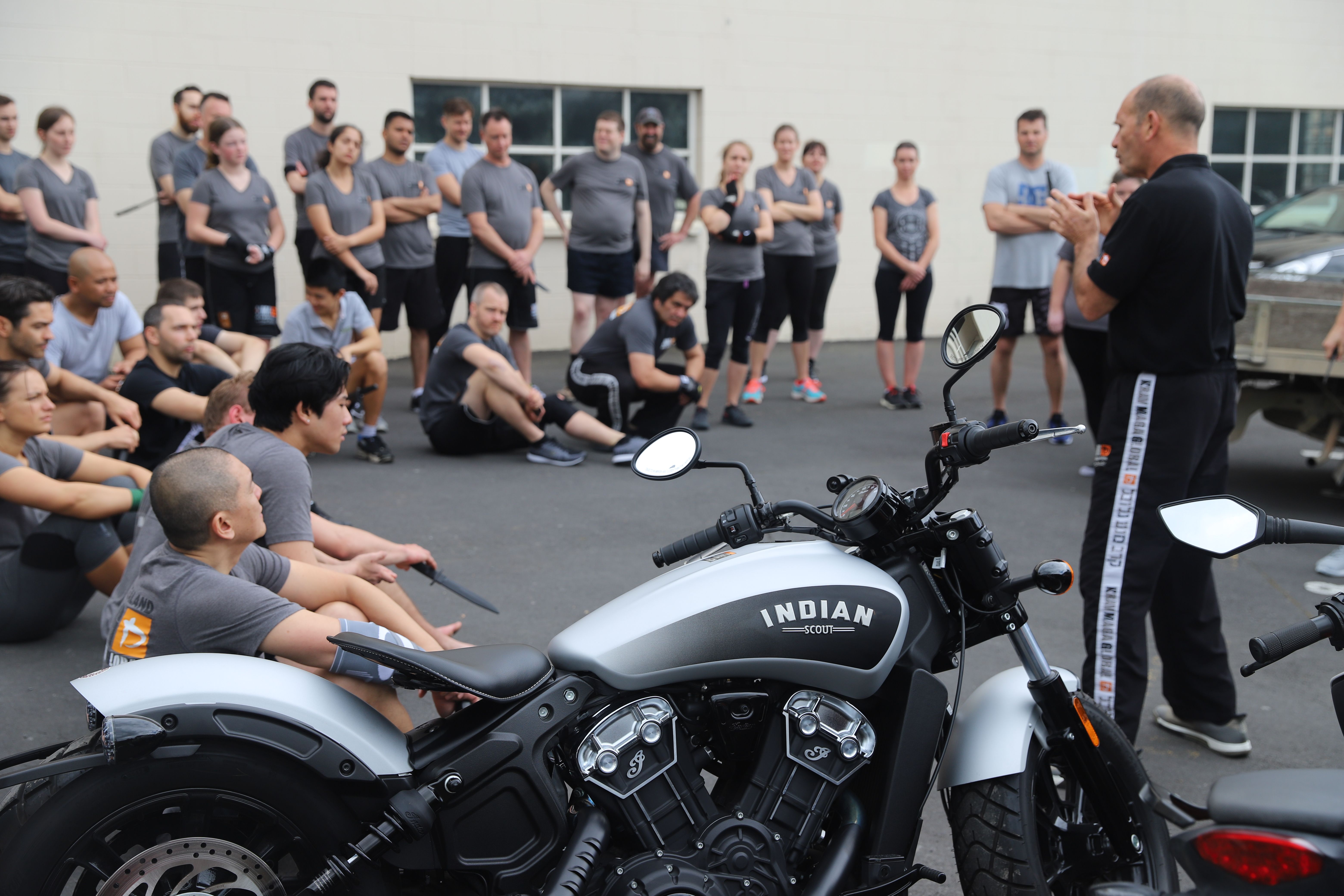
Eyal Yanilov teaching in Auckland.
Why does lineage matter in Krav Maga?
Lineage matters because not all Krav Maga is the same. Many organisations use the name, but they do not all share the same curriculum, instructor pathway, or connection to the system developed through Imi Lichtenfeld and Eyal Yanilov.
KMG New Zealand operates inside the wider Krav Maga Global framework rather than as a disconnected local interpretation. That gives students a clearer line back to the recognised international source and helps preserve consistency in how the system is taught.
For students, that means the origins are not just historical background. They still shape what gets taught, how it gets taught, and what standards the instructor network is expected to uphold.
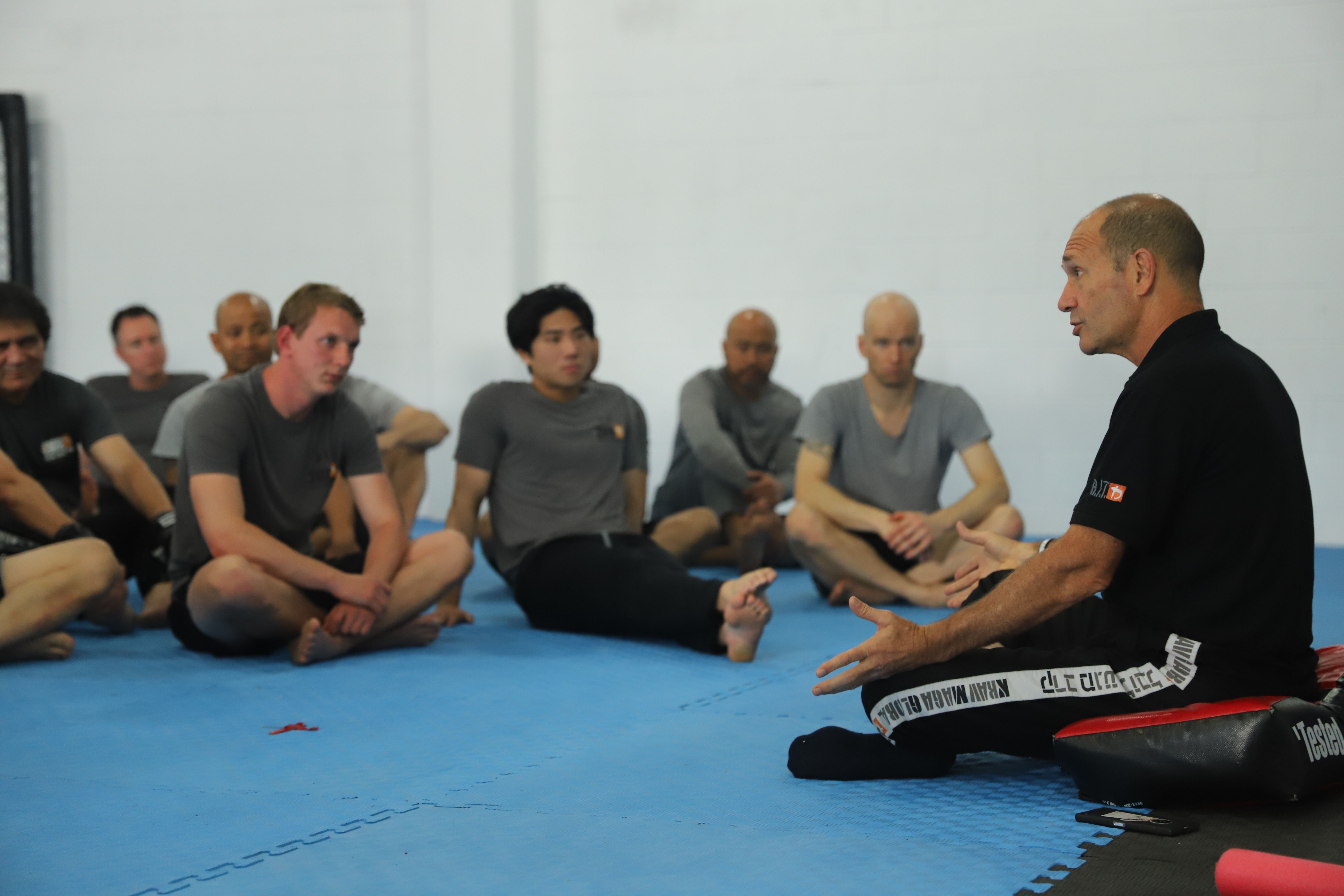
KMG training in New Zealand connected directly to the wider international system.
How does the KMG lineage connect to New Zealand?
KMG New Zealand is the national representative of Krav Maga Global in New Zealand and operates through an affiliated instructor network rather than as a single local club. That network sits within the same broader KMG system led internationally by Eyal Yanilov.
This matters because it connects training in New Zealand to a recognised international curriculum rather than leaving each region to create its own separate version of "Krav Maga." It also helps explain why the national site places so much emphasis on system-level clarity, instructor standards, and the wider KMG framework.
For a student, the practical takeaway is simple: the training you access through KMG New Zealand is tied to a broader lineage and structure, not just to a single individual or a local marketing claim.
KMG New Zealand instructors with Eyal Yanilov.
Why do the origins still shape how Krav Maga is taught today?
The founding question Imi asked in Bratislava — does this work against a real, uncooperative, dangerous opponent? — still shapes every serious KMG curriculum decision today. That is why there are no katas, no point-scoring priorities, and no techniques preserved simply for tradition's sake.
It is also why the system remains so focused on awareness, pressure, multiple attackers, and improvised or conventional weapons. The origin of Krav Maga was never abstract. It came from the need to deal with fast, unfair, chaotic violence.
If you want to understand how that same logic flows into the legal and ethical side of training, read Krav Maga and the Law. If you want the wider system context first, What Is Krav Maga? and About Krav Maga Global are the best next reads.
And if you want to understand how capability develops over time, The Self-Defence Training Timeline maps that progression clearly.
Key takeaway: the origins are not just history. They are the reason Krav Maga is still built around practicality, pressure, and real-world application."A fun, friendly environment with great instructors. An awesome way to learn self defence and gain confidence."
— KMG NZ member feedbackWhat people ask about the origins of Krav Maga
The foundations of Krav Maga were developed by Imi Lichtenfeld in Bratislava in the late 1930s in response to fascist street violence. The system was later refined and eventually developed into a structured civilian curriculum through the work of Eyal Yanilov and Krav Maga Global.
Krav Maga was founded by Imi Lichtenfeld. He built it out of necessity after discovering that sport fighting did not solve the problem of real street violence and mob attacks.
Eyal Yanilov is Imi Lichtenfeld's most senior active student and the person most closely associated with the modern KMG civilian curriculum. He helped structure, refine, and expand Krav Maga Global internationally.
Because Krav Maga came from real violence rather than from sport or tradition. The system was built around what worked under pressure, not what looked technical or impressive in controlled settings.
The best next step is the national locations page — it shows the full KMG New Zealand network and where to start. Visit krav-maga-global.co.nz/locations.
Find Your Nearest Training Location
Explore current training options across the KMG New Zealand network and start with the location that suits you best.
Find Training Near YouActive clubs in Auckland and Hastings. Courses building nationwide.