
Self-Defence in New Zealand: Core Concepts, Options & Training
Self-defence is the set of skills that keep you safe when a situation turns threatening — recognising danger early, avoiding or de-escalating where you can, responding physically when you have to, and getting to safety. In New Zealand, any force you use must be reasonable in the circumstances as you believed them to be (Section 48, Crimes Act 1961). Training options include Krav Maga, BJJ, boxing, Muay Thai, MMA and traditional martial arts. Krav Maga Global New Zealand teaches Krav Maga — a system built specifically for civilian self-defence — at clubs in Auckland and Hawke's Bay.
Most people who start training aren't looking to become fighters. They want to feel less nervous walking to their car at night, and to know that if something happened — to them, or someone they're with — they wouldn't freeze. That's exactly what good self-defence training builds.
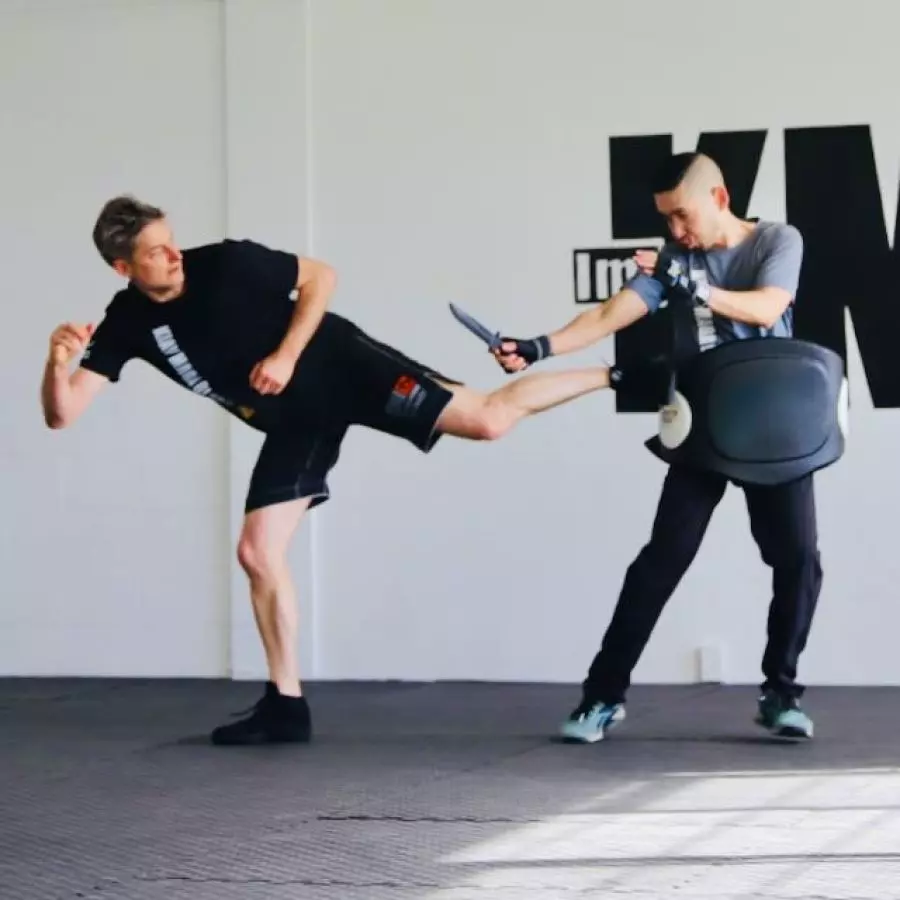
What does self-defence actually involve?
Self-defence is a whole process, not a single technique. In a real incident it tends to run through the same stages — and each one gives you options the next one doesn't.
Awareness
Noticing the shift in a situation early — behaviour, distance, exits — so you have time to act. Situational awareness is a trainable habit.
Avoidance & de-escalation
Leaving, repositioning, setting a boundary or calming things down before anything becomes physical. See de-escalation and conflict avoidance.
Physical response under pressure
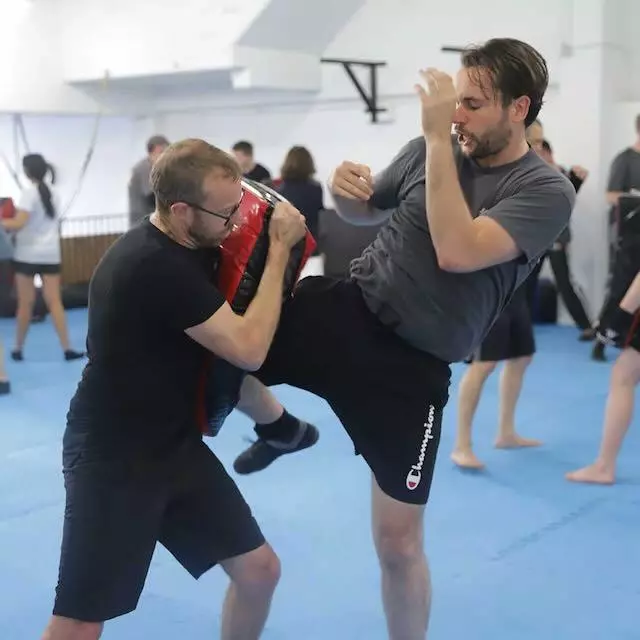
Simple, powerful responses to strikes, grabs, chokes and weapons that still work when adrenaline hits — including on the ground and against more than one person.
Escape & aftermath
Creating the chance to get away, getting to safety, and dealing with what happens next — including helping someone else.
The law
New Zealand allows force that's reasonable in the circumstances as you believed them to be. Understanding reasonable force — and what you can legally carry — is part of training, not a footnote to it.
Priority in a real incident isn't the same as the order you learn it. On the street, awareness comes first and physical response last. In KMG training it starts the other way: striking and movement first, to build physical skill, fitness and the confidence to defend yourself if you have to — then tactics, scenarios and the full timeline of awareness, prevention and de-escalation are layered in. That combination is what separates real self-defence from a one-on-one sport.
What types of self-defence training are available in New Zealand?
Different schools use different names, make different claims and train in very different ways. Here's a realistic breakdown of what's available — and what each is built to do. For a detailed comparison, see how Krav Maga compares with other martial arts and the best martial art for self-defence.
Krav Maga
Krav Maga is designed for one purpose: helping ordinary people protect themselves in real situations. Developed by Imi Lichtenfeld and refined into its modern civilian form by Eyal Yanilov through Krav Maga Global, it combines simple, powerful physical responses with awareness, de-escalation and decision-making under stress. There are no forms, sport rules or competition — and weapons, multiple attackers and the ground are part of training from the first level.
Brazilian Jiu-Jitsu (BJJ)
A grappling system focused on ground control and submissions — excellent for one-on-one situations that go to the ground, with a strong competition culture and clubs in most NZ cities. The gap: it doesn't train striking, weapons or multiple attackers, and its ground focus isn't ideal if your priority is to get up and get away.
Boxing
Boxing builds real striking skill — hand speed, accuracy, footwork and the ability to stay functional under pressure — and it's widely available. Its limits for self-defence: it trains striking at one range, and nothing on the ground, against weapons or against more than one person.
Muay Thai
One of the most practical striking arts, adding elbows, knees and clinch work to hands and feet. Like boxing, it builds real physical capacity — and like boxing, it's a sport system that doesn't cover the non-striking side of self-defence.
Mixed Martial Arts (MMA)
MMA combines striking and grappling and builds the most complete fighting skill set of any combat sport. It's built for one-on-one competition under rules, so it doesn't address weapons, multiple attackers, the law or avoiding the fight in the first place.
Traditional martial arts (karate, judo, taekwondo)
Widely available and valuable for discipline and long-term practice. Their self-defence value depends on the school: if self-defence is your goal, ask how much training is scenario-based versus forms and grading.
Every system here can improve your physical capability. The question is what you're training for. If you want to feel more capable and confident in everyday situations — not fight better in a ring — a system built specifically around that goal is worth understanding first.
What makes KMG training different?
The curriculum is internationally standardised. KMG New Zealand teaches the same curriculum used by Krav Maga Global clubs in 60+ countries, structured across Practitioner (P1–P5), Graduate (G1–G5), Expert (E1–E5) and Master levels. You're not learning one instructor's interpretation of self-defence.
It's one integrated system, not a collection of techniques. Defences against punches, grabs, chokes, knives and other weapons share the same core movements and principles, and they're trained in combination — with multiple attackers, in different environments, and while protecting others.
Weapons are part of training from the start. Knife defence, for example, is in Practitioner Level 1 — see how KMG trains knife defence.
You don't need to be fit, young or experienced. Training is built around principles that work for the body you have now, and there's no gi or belt — you train in normal athletic clothes and shoes. The system was developed under Eyal Yanilov, who trained directly under Imi Lichtenfeld, the founder of Krav Maga.
Explore self-defence concepts
In-depth guides to the ideas KMG training is built around — from awareness and the law to real threat patterns in New Zealand.
Awareness & mindset
Most incidents give warning signs. These skills give you more options before anything physical happens — and help you function when it does.
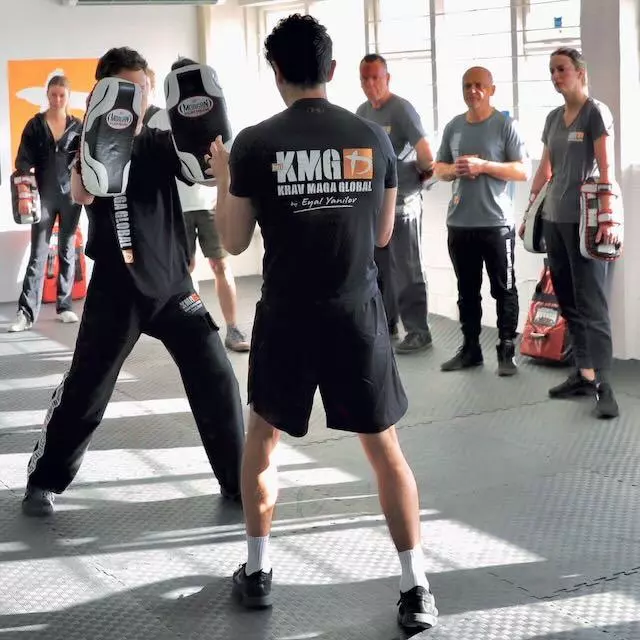
Situational Awareness for Beginners
Noticing more, earlier — the habit that gives you the most options before anything physical begins.
Read the guide →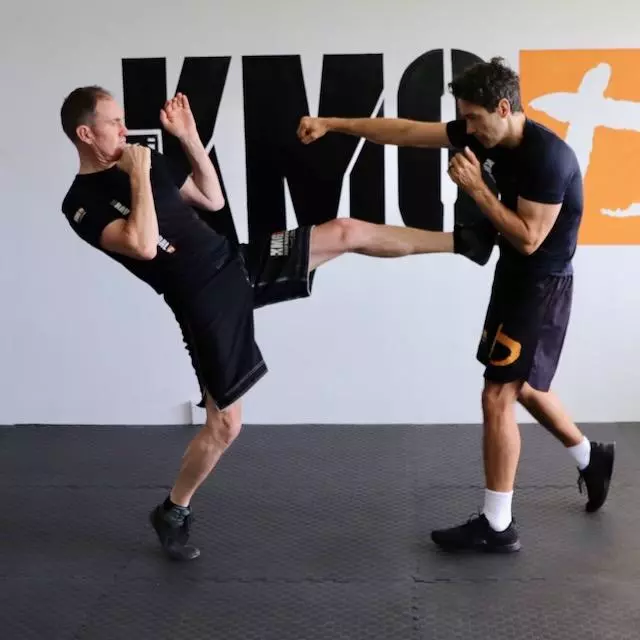
The Krav Maga Self-Defence Timeline
How KMG structures a response — from the earliest warning signs to physical defence and disengagement.
Read the guide →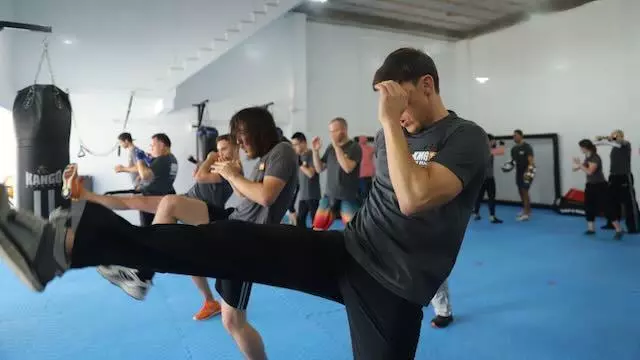
De-Escalation and Conflict Avoidance
Distance, positioning and verbal skills that can stop a confrontation becoming physical.
Read the guide →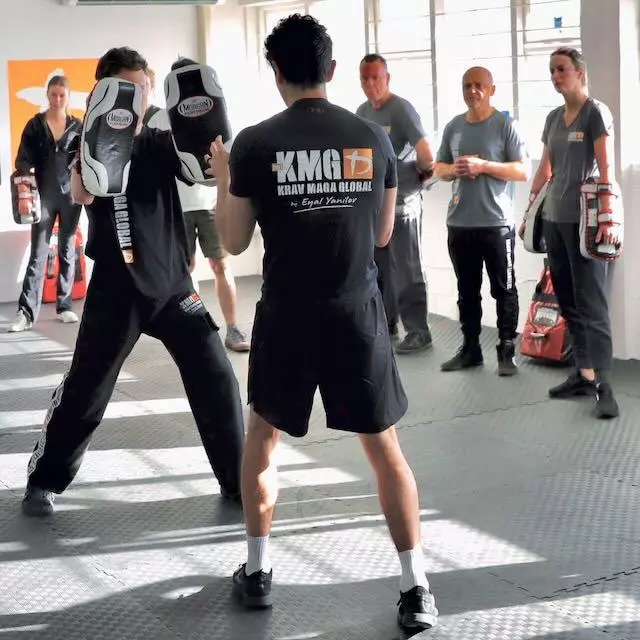
Mental Preparation in Self-Defence
Why people freeze under pressure — and how realistic training builds the ability to act.
Read the guide →Self-defence and New Zealand law
Section 48 of the Crimes Act allows you to defend yourself with force that's reasonable in the circumstances. These guides explain what that means in practice.
Is Self-Defence Legal in New Zealand?
What the law says, when it applies, and what it means for how you respond.
Read the guide →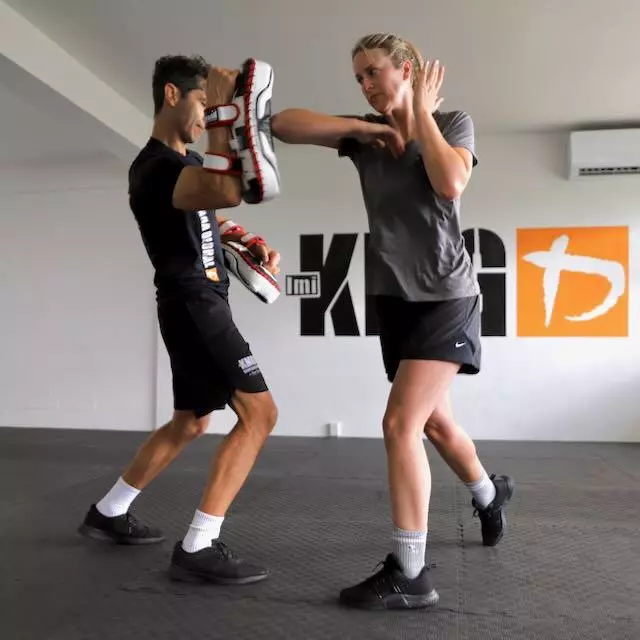
What Is Reasonable Force in NZ?
Section 48 explained — what proportionate response means, with the circumstances as you believed them to be.
Read the guide →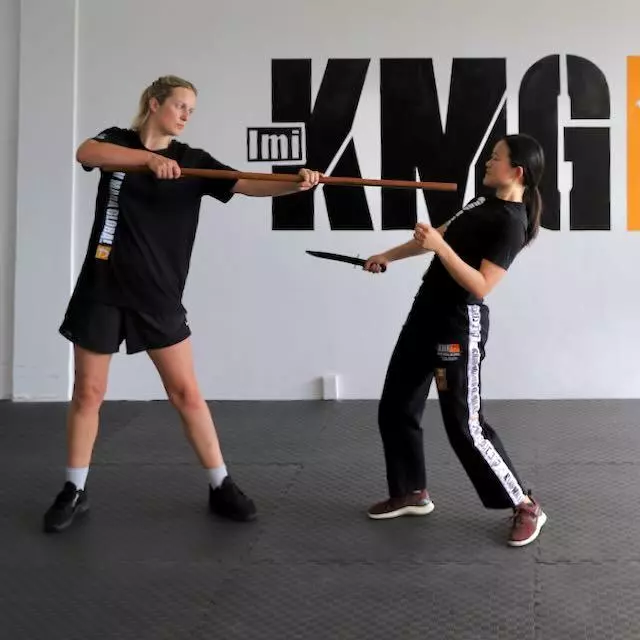
What Can You Legally Carry for Self-Defence?
Pepper spray, knives, tactical pens and everyday objects — what NZ law allows, and what it doesn't.
Read the guide →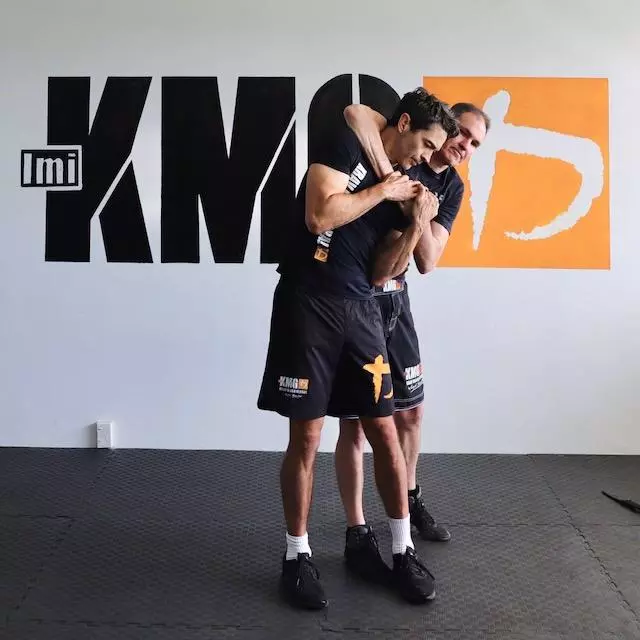
Krav Maga, Self-Defence, Law and Ethics
The decisions people face under pressure — and how training prepares you to make them lawfully.
Read the guide →Real threats and how KMG trains for them
Training is built around the situations people actually face — including weapons, the ground and the unexpected.
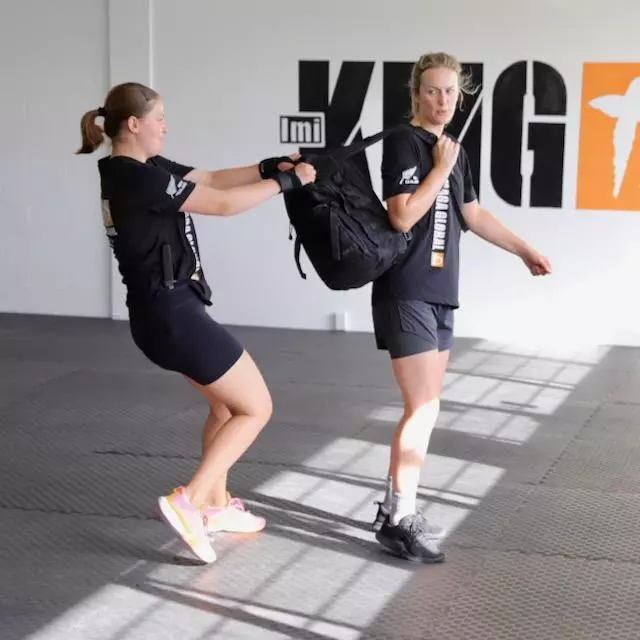
Most Common Types of Assault in New Zealand
What the data shows about assault patterns in NZ — and what self-defence training should be built around.
Read the guide →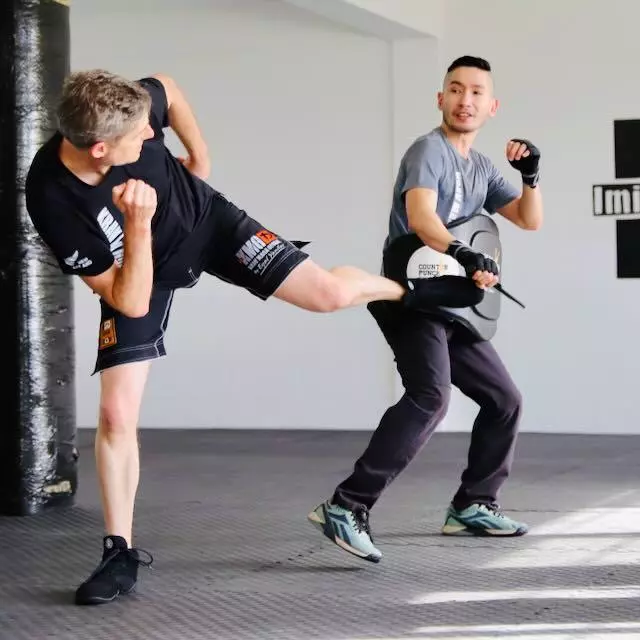
Can You Actually Defend Against a Knife Attack?
A qualified yes — how KMG trains knife defence from Level 1, from keeping distance to controlling the knife arm and disarming.
Read the guide →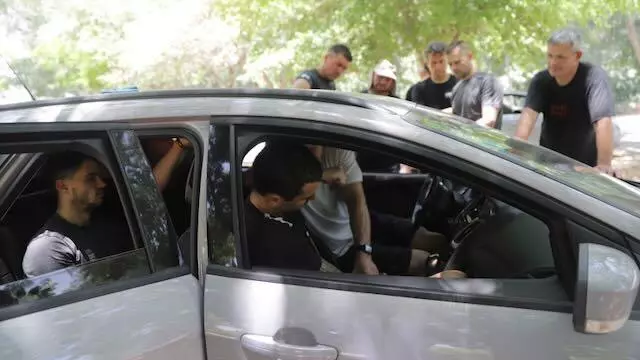
Improvised Weapons Training
Bottles, chairs, belts, bags — defending against everyday objects, and using what's around you.
Read the guide →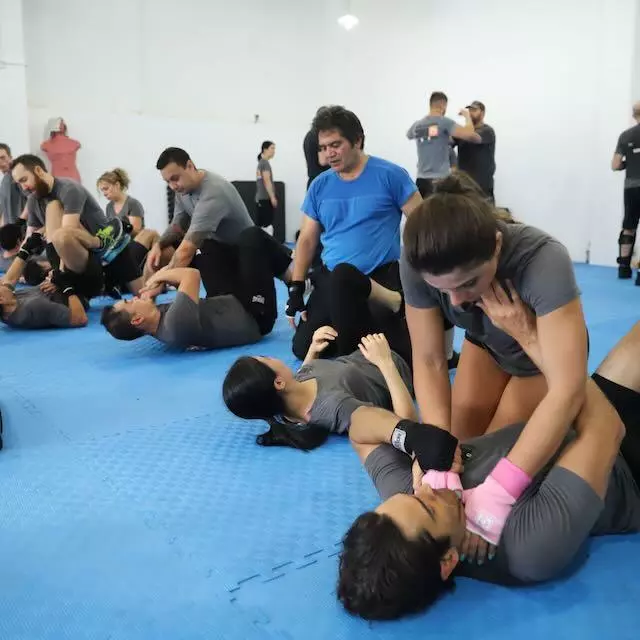
Ground Defence for Self-Defence
If you end up on the ground, the priority is getting back up safely — how that's trained.
Read the guide →Is self-defence training right for you?
Krav Maga is built for ordinary adults — no fitness baseline, no martial arts background, no special attributes.
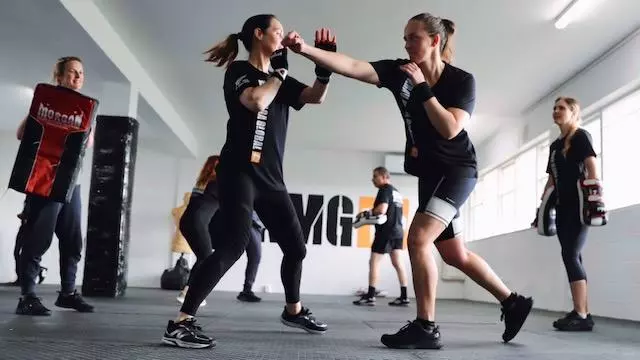
Self-Defence for Women in New Zealand
Awareness, escape and real-world skills built around the situations women are most likely to face.
Read the guide →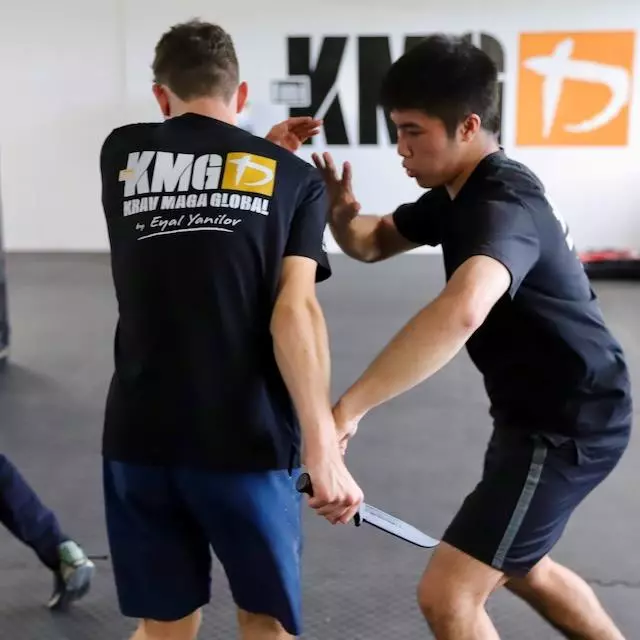
Is Krav Maga Good for Older Adults?
Why a system built on judgement, awareness and efficiency works at any age.
Read the guide →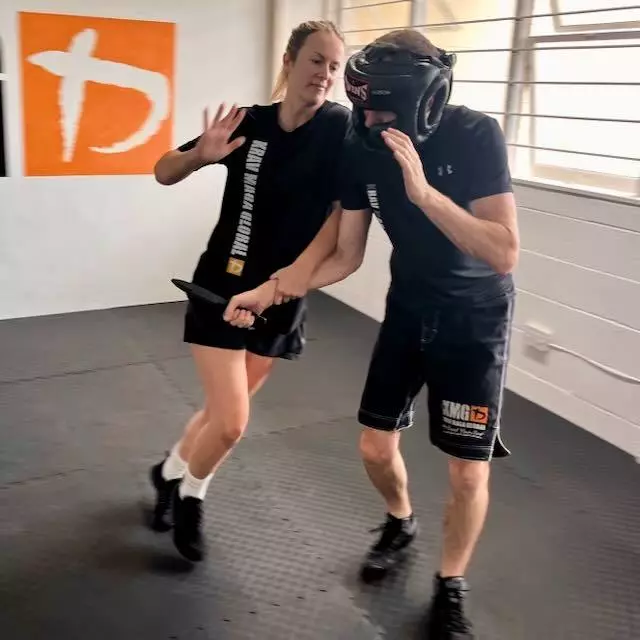
Is Krav Maga Effective?
What makes a self-defence system effective — and how the KMG curriculum holds up outside controlled conditions.
Read the guide →Frequently asked questions about self-defence in New Zealand
Self-defence covers everything from recognising danger early, through avoiding or de-escalating a situation, to responding physically when you have to — and getting to safety afterwards. In New Zealand, any force you use must be reasonable in the circumstances as you believed them to be (Section 48, Crimes Act 1961). Good training develops all of it: physical skills that work under pressure, plus awareness, decision-making and an understanding of the law.
It depends on what you mean by effective. For sport and fitness, Brazilian Jiu-Jitsu, Muay Thai and MMA are excellent. For civilian self-defence — surprise attacks, multiple people, weapons — Krav Maga is one of the few systems designed specifically around those situations. Krav Maga Global New Zealand teaches the internationally standardised KMG curriculum, built to work under real-world stress rather than controlled conditions.
KMG New Zealand has active clubs in Auckland (North Shore and West Auckland) and Hastings & Napier in Hawke's Bay, with weekly classes open to beginners — West Auckland also runs kids' classes. If you're in Wellington, Christchurch, Hamilton, Tauranga or another centre, you can register your interest and be first to hear when training starts near you.
Yes. Most people who train at KMG clubs start with no martial arts background. The system is built on simple, practical responses rather than athletic ability, and the structured curriculum means you progress at a pace that makes sense, with instructors used to working with complete beginners.
The core difference is purpose. Combat sports and traditional martial arts are built around rules, scoring or forms. Krav Maga was built to help ordinary people deal with real-world threats — so training covers what most martial arts skip: weapons, multiple attackers, different environments, protecting others, de-escalation and the law. It is one integrated system, not a collection of single techniques.
Most people notice a real change in confidence within the first few months of regular training. In the KMG curriculum, Practitioner Level 1 (P1) typically takes around four to six months and covers core responses to common real-world attacks — including knife defence. It's a genuine foundation, and the curriculum keeps building from there.
Yes. Self-defence is lawful under Section 48 of the Crimes Act 1961, provided the force you use is reasonable in the circumstances as you believed them to be. KMG training covers this directly: physical skills are taught alongside awareness, de-escalation and the decisions the law expects you to make under pressure.
Start Training Near You
Beginner-friendly classes every week in Auckland (North Shore and West) and Hastings & Napier. No experience needed.
Elsewhere in NZ? Register your interest for a course near you