
Do You Need to Be Strong to Defend Yourself?
No. Strength is useful in any physical situation, but self-defence does not depend on it. Effective self-defence is built on timing, positioning, awareness, and simple technique — things that can be learned and applied regardless of size or fitness level.
The idea that self-defence belongs only to the physically strong is one of the most common and most unhelpful myths in the field. It stops people from starting training because they assume they are already at a disadvantage before they have learned anything.
The reality is more useful. What makes self-defence work in practice is not raw strength — it is understanding, timing, positioning, and the ability to act quickly and decisively when it matters.
That is trainable. And it does not require you to be the strongest person in the room.
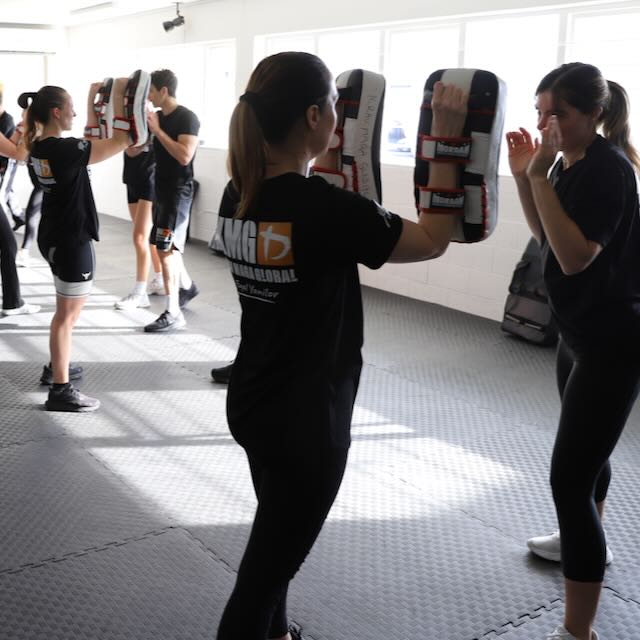
Effective self-defence is built on awareness, timing, and simple technique — not on being the strongest person in the situation.
Where does the "you need to be strong" myth come from?
Mostly from combat sports. When most people picture self-defence, they picture fighting — and most fighting they have seen rewards size, power, and athletic conditioning. Heavier fighters hit harder. Stronger grapplers are harder to escape.
That framing is accurate for competition. It is much less accurate for real-world self-defence situations, where the goal is not to win a sustained exchange but to disrupt an attack, create an opportunity, and get to safety as quickly as possible.
Those are different problems. And they do not have the same solution.
Key takeaway: combat sports reward strength. Self-defence rewards awareness, timing, and decisive action — which are very different things to train for.What actually matters in self-defence?
Several things matter more than raw strength in most real-world situations.
Awareness
Recognising a situation before it escalates gives you more options. Most of self-defence happens before anything physical occurs.
Timing
Acting at the right moment is more effective than acting with maximum force at the wrong moment. Timing is a skill, not a physical attribute.
Positioning
Where you are relative to a threat matters enormously. Good positioning can make a response far more effective with much less effort.
Targeting
Vulnerable targets respond to force regardless of the size of the person applying it. This is one of the foundational principles of practical self-defence.
Simplicity under stress
Simple movements are more accessible when stressed. Complex techniques require conditions that real situations rarely provide.
Decision speed
Hesitation costs more than weakness in most situations. The ability to act quickly and decisively is often what matters most.
Does strength help at all?
Yes — it would be dishonest to say otherwise. Strength, fitness, and physical conditioning are always useful. A stronger person applying the same technique with the same timing will generally produce a more effective result.
But that is not the same as saying self-defence requires strength as a prerequisite. It means strength is one factor among several — and often not the most important one in the situations that matter most.
The more relevant question is: what can you build that will actually help you in a real situation? And the answer includes awareness, recognition, simple physical skills, and the ability to act quickly — all of which are trainable regardless of your current fitness level.
Key takeaway: strength helps, but it is not the determining factor. Many things that matter more are directly trainable.How does Krav Maga address the size and strength difference?
Directly. The KMG curriculum is built around the reality that self-defence situations often involve a size or strength disadvantage. That is not an edge case — it is one of the most common dynamics in real-world situations, particularly for women.
| Principle | Why it matters when strength is unequal |
|---|---|
| Leverage over force | Mechanical advantage can compensate significantly for strength differences |
| Vulnerable targets | Some targets respond to impact regardless of the force applied |
| Disruption not domination | The goal is to break the attack, not to overpower the attacker |
| Create distance and escape | Removing yourself from danger is the objective — not winning a sustained exchange |
| Early action | Acting before a situation becomes a full struggle reduces the relevance of strength considerably |
What does this mean for someone who is smaller or less physically confident?
It means the starting point is not as limiting as it might feel. Self-defence capability is built, not inherited. The people who train consistently — regardless of starting size or fitness — develop real, practical skills that work in real situations.
That does not mean training is easy or that physical condition is irrelevant. It means the gap between "where I am now" and "meaningfully more capable" is much smaller than most people assume, and much more accessible than the "you need to be strong" framing suggests.
For the broader context on why this system works for women specifically, read Is Krav Maga Good for Women?
What about confidence — does that require physical strength?
No. Real confidence in self-defence comes from capability, not from size. The shift most people notice when they train is not that they become physically larger or dramatically stronger. It is that they become more aware, more decisive, and more certain about what they would do if something happened.
That shift changes how people carry themselves — which is itself a meaningful form of self-defence. Awareness and presence matter. And they come from training, not from a gym programme.
If the confidence and hesitation side of this resonates, the companion page is Why Many Women Freeze in Dangerous Situations.
Key takeaway: the confidence that comes from real training is not about feeling bigger. It is about knowing what you would do — and that matters more.So — do you need to be strong to defend yourself?
No. You need to be trained. Strength is useful but it is not the entry requirement or the determining factor. What you need is awareness, simple skills that work under stress, the ability to act decisively, and a system built for real situations rather than sporting competition.
All of that is buildable. And it starts with training, not a physical baseline you may feel you do not yet meet.
For a practical next step, read What Happens in Your First Krav Maga Class and How Krav Maga Works.
What do people usually ask about strength and self-defence?
No. Fitness improves through training. You do not need to arrive in shape — you build capability as you go. What matters is starting, not the level you start from.
Yes — with the right approach. Self-defence is not about overpowering someone larger. It is about disrupting an attack, creating distance, and getting safe. Timing, positioning, and targeting matter far more than size in those moments.
Yes. The KMG curriculum is built around the reality of size and strength differences. It focuses on disrupting attacks, creating opportunities to escape, and acting early — not on matching strength for strength.
Training builds fitness as a by-product, but the more important changes are in awareness, decision-making, and capability under stress. Those things improve faster and matter more in real situations.
Start at the national locations page at krav-maga-global.co.nz/locations — it shows the full KMG New Zealand network including waitlist registration for cities where courses are building.
Find Training Near You
Practical self-defence built around what actually works — awareness, timing, simple technique, and the ability to act when it matters.