
Women's Self-Defence: Why Krav Maga Works
Krav Maga Global New Zealand teaches self-defence as a complete system — awareness, avoidance, de-escalation, and physical response. For women, the physical side is specifically designed around situations involving a size or strength disadvantage: targeting vulnerable points, using gross motor movements that hold up under stress, and prioritising escape over prolonged exchange. The goal is not to win a fight. It is to create an opportunity and get out safely.
Self-defence training should be practical, realistic, and accessible — especially for women who may face situations involving size, strength, or situational disadvantage. Many systems are not built with that in mind. Krav Maga is.
Rather than relying on strength or athleticism, the KMG system focuses on simple, effective actions, awareness, and decision-making under pressure. These are skills that develop with training and apply regardless of physical size.
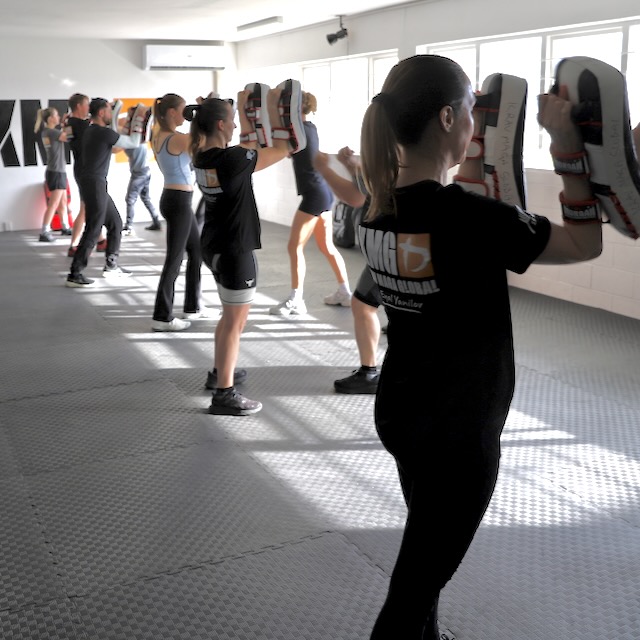
Controlled pad drills build striking mechanics, timing, and confidence — skills that translate under pressure.
Is Krav Maga good for women?
Yes — for many women, it is one of the more practical ways to build real self-defence capability. The system does not require strength, prior experience, or a competitive mindset to produce useful results. It is designed around the assumption that the defender may be smaller, caught off guard, or facing someone physically stronger — which is often exactly the situation women need to prepare for.
The training builds awareness, decision-making, and practical physical responses together. That combination tends to produce a meaningful shift in confidence — not just in the sense of feeling capable, but in knowing how to read situations earlier and act more effectively when it matters.
Why self-defence needs to reflect real-world situations
Many training systems are built around fair, matched competition. Real situations are rarely like that. Self-defence may involve surprise, a confined space, or someone significantly larger or stronger. That changes what works.
A system built for sport assumes roughly matched opponents in a controlled environment. A system built for self-defence assumes the opposite: that conditions will often be unfair, the environment will vary, and the decision to act will need to be made fast.
That is the starting assumption behind Krav Maga — and it is why the system can be particularly relevant for women, who are statistically more likely to face situations involving size or strength asymmetry.
Key takeaway: effective self-defence training starts from realistic assumptions, not ideal ones.Why Krav Maga is effective for women's self-defence
The KMG system addresses size and strength disparity directly through how techniques are selected and trained. This is not a modification to the system — it is built into the core of it.
Targeting vulnerable points
Effective responses focus on high-percentage targets that do not depend on matching the attacker's strength. Eyes, throat, groin, and knees are effective regardless of size difference.
Gross motor movements under stress
Techniques are based on instinctive reactions and large muscle actions — the kind that remain available when fear and adrenaline are high and fine motor skill has degraded.
Escape-focused objective
The goal is never to dominate or win a prolonged exchange. It is to disrupt the attacker, create space, and exit. That is a more realistic objective when size is a factor.
Progressive pressure training
Drills gradually introduce resistance and unpredictability, helping students build confidence and decision-making when situations feel fast or physically threatening.
Training for situations women are more likely to face
Good self-defence training acknowledges that different people face different types of situations. For women, relevant scenarios often include being grabbed from behind, pinned or held close, pressured in a confined space, or needing to create distance quickly from someone significantly larger.
That means training should include responses from disadvantaged positions — on the ground, from close range, against a pin or choke — with the objective always being to disrupt, create space, and escape rather than to sustain a physical exchange.
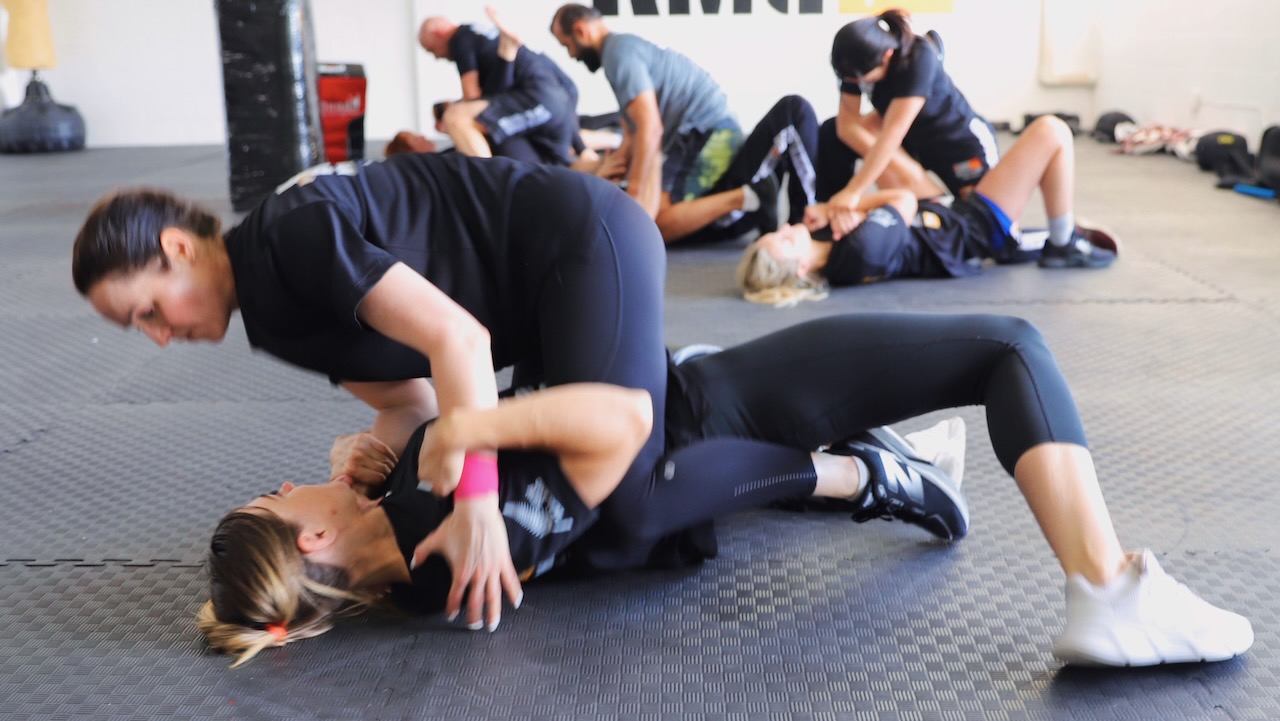
Ground defence training: when pinned beneath a larger attacker, the priority is counterattacking to vulnerable targets, breaking the choke, and creating the space to escape — not trying to out-muscle from underneath.
This is where the escape-first mindset matters most. If you are on the ground beneath someone bigger and stronger, the objective is not to win a grappling match. It is to cause enough disruption — a strike to a vulnerable target, a shift in their weight, a break in the choke — to create the moment you need to get up and get out.
KMG training includes these positions because they reflect what real self-defence sometimes demands. Not matched exchanges on a mat, but messy, close, physically disadvantaged situations where the priority is survival and exit.
Key takeaway: training from disadvantaged positions builds the specific capability that matters most when size is a real factor.Confidence, decision-making, and mindset
One of the most significant benefits of training is not physical — it is psychological. Many people hesitate in threatening situations not because they lack ability, but because they are unsure how to read the situation, when to act, and what to do next.
Training builds the habit of making decisions under pressure. That clarity — knowing what your options are and having practised them — changes how a person carries themselves in everyday situations, not only in moments of immediate danger.
What training helps develop
- Clear decision-making under physical and emotional pressure
- The ability to act quickly and decisively when a window opens
- Confidence without overconfidence — grounded in honest practice
- A calm, aware presence that reduces the chance of becoming a target
- Verbal boundary-setting and de-escalation as first-line tools
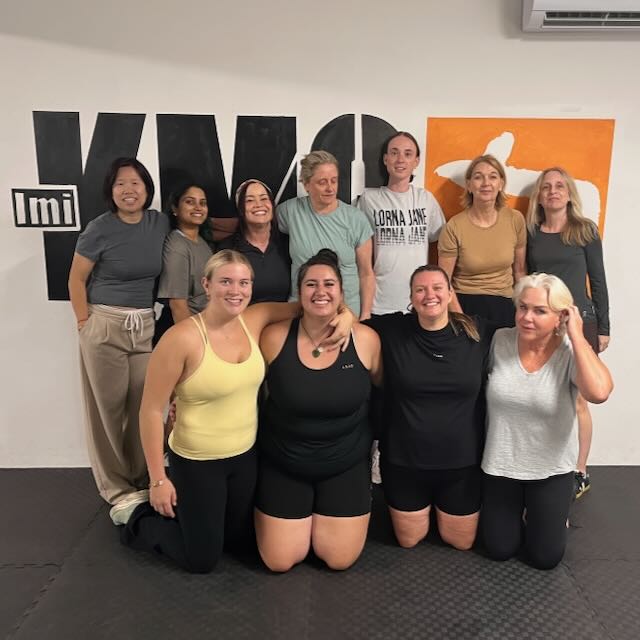
KMG workplace seminars are regularly attended by women in health, education, and public-facing roles — practical self-defence within the expectations and constraints of professional environments.
This is especially relevant for women working in public-facing roles — health, nursing, teaching, social work, retail, transport — where managing aggression is part of the job. The training is useful not just as a physical toolkit, but as a framework for awareness, de-escalation, and proportionate response that fits within professional and legal expectations.
For the broader picture on awareness and early decision-making, read Situational Awareness for Beginners.
How this compares to other options
Combat sports and traditional martial arts offer real value — conditioning, technical skill, and discipline. The difference is that they are built around matched competition, which comes with assumptions about the environment, the opponent, and the rules that do not hold in real self-defence.
Krav Maga is built around the opposite assumptions: that the situation will often be unfair, the environment will vary, and the attacker will not behave like a training partner. That makes it a different tool for a different purpose — one that fits the self-defence goal more directly.
For a full comparison across systems, Best Martial Art for Self-Defence covers that in depth.
Is Krav Maga a good choice for women?
For many women, yes — particularly when the goal is practical self-defence capability that accounts for real-world conditions. The system does not require prior strength, martial arts experience, or a competitive mindset to begin producing useful results. What matters is consistent training under good instruction.
The KMG New Zealand instructor team teaches the same internationally consistent curriculum used across Krav Maga Global's network — built around the system developed by Imi Lichtenfeld and maintained under Eyal Yanilov. That lineage matters because it means the training has been pressure-tested in real contexts, not assembled from theory.
For women who want to understand the system more broadly before committing to a class, How Krav Maga Works and Is Krav Maga Effective? are the best starting points.
What women ask about Krav Maga and self-defence
Yes. Krav Maga is designed to be accessible for beginners, including women with no prior training. Classes introduce core concepts progressively, and you are not expected to have prior experience in striking, grappling, or any other system.
The system is built for exactly that situation. Rather than trying to match strength, KMG training focuses on high-percentage vulnerable targets, gross motor movements that work under stress, and an escape-first objective. The goal is to create a window of opportunity and use it to get out — not to overpower a larger attacker.
No. Conditioning and confidence develop through training, not before it. Many women begin with no martial arts background and build practical capability over time through consistent practice.
Yes. Many women in health, education, social work, retail, and transport attend KMG training specifically because it includes awareness, verbal de-escalation, and proportionate physical options — all within the legal and ethical expectations of a professional environment. Workplace seminars are also available.
Yes. KMG training includes responses from disadvantaged ground positions — being pinned, choked, or held close by someone larger. The objective is always to create disruption, break contact, and escape — not to engage in prolonged ground fighting.
Active KMG training is currently available in Auckland and Hastings. The national locations page connects you to the full network, including waitlist registrations for cities where courses are being developed.
Find Training Near You
Find your nearest active KMG training option and see how the system works in practice.