
De-Escalation and Conflict Avoidance in Self-Defence
The safest self-defence outcome is a situation that never becomes physical. De-escalation and conflict avoidance aren't alternatives to self-defence training — they're the first skills it develops. Recognising danger early, managing distance and positioning, using verbal skills to reduce tension, and knowing when to leave are all trainable capabilities. Physical technique is the last resort in a sequence that starts long before any contact occurs.
Most people think of self-defence as what happens when a confrontation turns physical. The more accurate picture is that self-defence is everything that happens before that — and if it works, the physical part never arrives.
Good self-defence is not about ego, toughness, or winning confrontations. It's about recognising danger early enough to have options, and using those options to stay safe. Physical technique is real and important — but it sits at the end of a sequence, not the beginning.
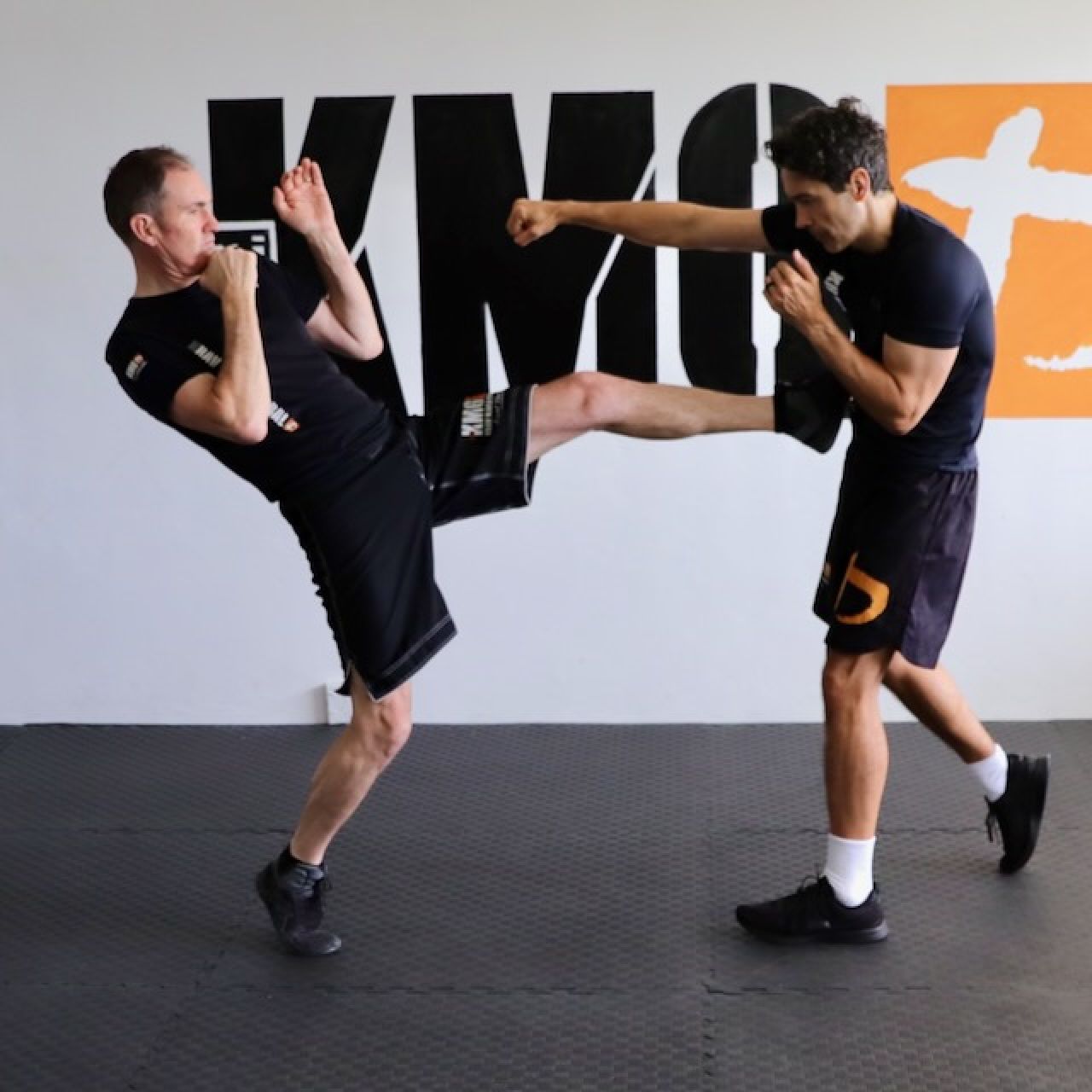
The KMG priority framework: awareness and avoidance first — physical response only when everything else has failed.
Why Avoidance Is the First Priority, Not a Fallback
Avoiding a violent confrontation is not a soft option — it's usually the best possible outcome. Even when someone is legally and physically capable of defending themselves, the consequences of violence rarely fall only on the attacker. Physical confrontations involve injury risk, legal complexity, and outcomes that are genuinely unpredictable once they begin.
None of these consequences disappear because you won. This is why experienced self-defence practitioners — across systems and backgrounds — consistently emphasise avoidance first. Not as a moral preference, but as a practical recognition that the best outcome is the one that didn't happen.
The KMG civilian curriculum reflects this directly. The priority sequence taught from Practitioner Level 1 onward is: awareness, avoidance, de-escalation — and physical response only when those have all failed or are unavailable.
Situational Awareness: Creating Options Before They Close
The single most important variable in conflict avoidance is time — and awareness is what creates it. Most dangerous situations have observable warning signs before physical contact occurs. Behaviour changes. Posture shifts. Distance closes in a way that feels deliberate. Eye contact patterns change. Exits become relevant in a way they weren't a moment ago.
Someone who notices these signals at the earliest stage has the widest range of options: they can leave the area before anything develops, reposition to improve their situation, increase distance, stay near people or exits, or simply become more attentive. Each of those options narrows or disappears as the situation develops — which is why early recognition is not just useful but fundamental.
Situational awareness is a trainable skill, not an innate one. It develops through deliberate habit formation — scanning environments systematically, noticing what changes, understanding which behaviours precede aggression. Students who train this specifically find it becomes automatic over time: not paranoid hypervigilance, but calm background awareness that doesn't require active effort.
For third-party protection — when someone you care about is also present — this skill becomes even more critical. Recognition needs to happen early enough to move more than one person to safety, which requires more time and more situational clarity than protecting yourself alone.
What De-Escalation Actually Involves
De-escalation is not talking your way out of everything — it's the process of reducing tension and emotional intensity before a situation crosses into violence. Many confrontations that become physical didn't have to. The moment before contact is often still a moment where different choices lead to different outcomes.
Effective de-escalation in a self-defence context typically involves several components working together:
- Tone and pace of speech. Calm, measured speech reduces rather than matches emotional escalation. A raised voice tends to raise the other person's voice. Steady, clear communication creates a different dynamic.
- Non-threatening body language. Open posture, visible hands, positioning that doesn't signal aggression or fear — these communicate composure and reduce the triggers that sometimes push confrontations into violence.
- Distance management. Maintaining enough distance to have reaction time while not retreating in a way that signals vulnerability. Distance is a tool during de-escalation, not just a safety measure.
- Boundary setting. Clear, direct statements about what you will and won't accept — without aggression, but without ambiguity. Unclear boundaries can be misread as permission to continue.
- Creating exit opportunities. Using the conversation and positioning to create a natural point of departure that doesn't require either person to "lose face." Many confrontations continue because neither party sees a way out without losing status.
None of these are guaranteed to work. Some people cannot be reasoned with. Some situations have already passed the point where communication is the relevant tool. But de-escalation skills extend the window before that point and create opportunities that wouldn't otherwise exist.
"I instinctively de-escalated a situation in a grocery store thanks to the reflexes I built here. It works."
— Raymund, Google · KMG West AucklandDistance and Positioning: The Tactical Layer of Avoidance
Positioning and distance management are the tactical expression of situational awareness — converting what you've noticed into physical options. Most people underestimate how much difference these make, because they don't have a reference point for what good positioning actually looks like in practice.
The basic principles are consistent: maintain enough distance to have reaction time, avoid being cornered or having exits blocked, keep your back to a wall or other solid cover where possible, and position yourself so that the threat is in front of you and exits are accessible. These aren't defensive stances — they're how you move through environments when you're paying attention.
Distance is particularly important because it determines how much time you have between recognition and contact. An aggressive person at three metres gives you more processing time than one at arm's length. That processing time is where avoidance and de-escalation happen — and once it's gone, the range of options narrows sharply to physical response.
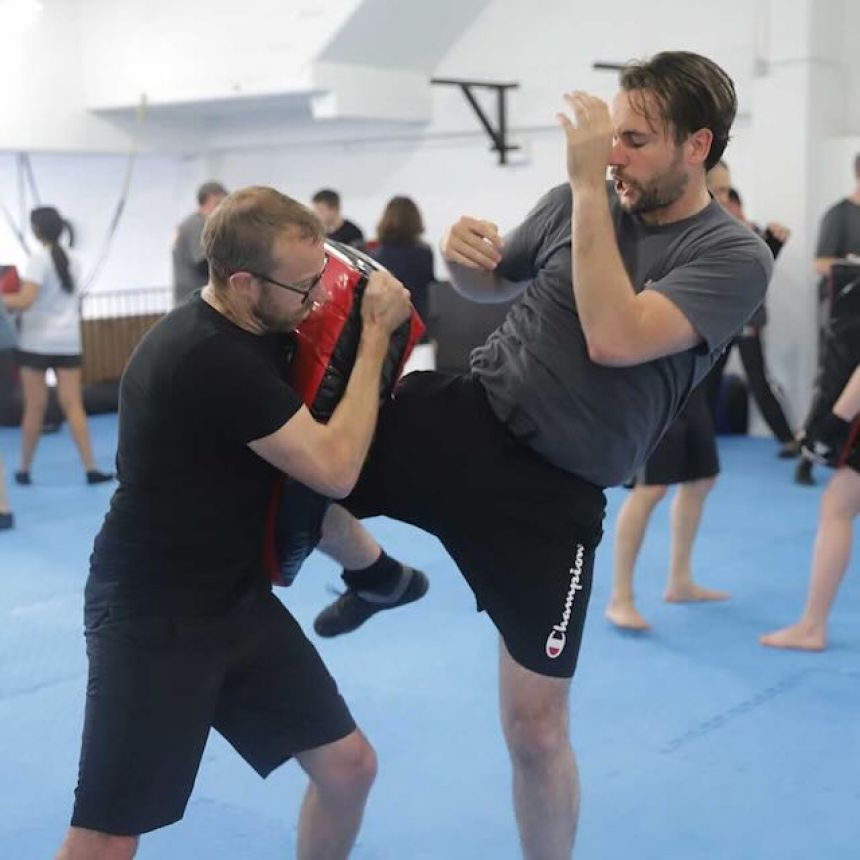
This is one reason KMG training pays significant attention to movement and positioning from beginner level. Students practise maintaining distance, recognising when distance is closing faster than it should, and moving in ways that preserve their options without signalling aggression or panic.
The Ego Problem: Why Confrontations Escalate Unnecessarily
Many confrontations that become violent didn't start as physical threats — they started as ego conflicts. Status, perceived disrespect, arguments about right-of-way, social friction that escalates past the point where either party can see a way to disengage without losing face.
Understanding this dynamic is part of self-defence training. Someone who has genuinely internalised the priority framework — who has trained long enough that avoiding violence is an automatic first response rather than something that requires active suppression of ego — handles these situations differently. They don't need to "win" the argument. They don't need to be seen as tough. They're not managing an underlying anxiety about whether they could handle a physical confrontation. They simply leave.
The confidence that comes from realistic physical training tends to reduce ego-driven confrontations, not increase them. People who know what they can do under real pressure have less to prove in ambiguous situations. This is one of the consistent observations from KMG training across different student demographics — the most capable practitioners are often the calmest in situations that might provoke less-trained people.
For a deeper look at how training builds this kind of composure, see the article on how self-defence training reduces freezing under pressure — the same stress familiarisation that reduces physical freezing also reduces emotional reactivity in conflict situations.
When De-Escalation Stops Working
De-escalation and avoidance have limits, and recognising those limits is as important as the skills themselves. Some people cannot be de-escalated. Some situations have already passed the decision point. Some threats don't give you a verbal window — they move directly to physical contact.
The transition point — when the priority shifts from avoidance to physical response — is something KMG training addresses directly. Students learn to recognise the pre-attack indicators that signal imminent physical contact: specific posture changes, weight shifts, attention patterns, the specific body mechanics that precede a committed attack. Recognising these allows the shift from verbal management to physical response to happen without hesitation.
This is why de-escalation and physical self-defence aren't separate tracks — they're sequential layers of the same response system. The verbal and physical components are trained together in scenario work, so that students develop fluency in moving between them rather than treating them as different modes that require a conscious decision to switch.
For students working on the physical response side of this — what happens when de-escalation has failed and contact occurs — the article on mental preparation in self-defence covers the psychological dimension, and ground defence covers what happens if the situation involves loss of footing or a takedown.
De-Escalation in the Context of Protecting Others
When someone else is present — a partner, a child, a friend — de-escalation takes on additional importance and additional complexity. The goal of buying time and creating distance becomes more urgent because you're managing more than one person's safety and movement. And the emotional load of the situation is higher, which makes the composure that de-escalation requires harder to maintain.
Communication becomes a dual task: managing the threat verbally while also directing the protected person clearly and calmly. Panic spreads quickly through groups, and a verbal approach that keeps the situation from escalating physically also keeps the people around you calmer — which gives you more options and more capacity to manage what comes next.
This is one reason third-party protection training includes verbal scenario components alongside physical ones. The skill of staying composed and communicating clearly while managing a threat and directing another person simultaneously is specific — it doesn't develop automatically from physical training alone.
Frequently Asked Questions
Yes. The KMG civilian curriculum places awareness and avoidance before physical technique in the priority sequence — not as an optional add-on, but as the first layer of a complete self-defence system. Verbal de-escalation and conflict avoidance are integrated into scenario training from beginner level, alongside the physical curriculum.
De-escalation doesn't always work — some people can't be reasoned with, and some situations escalate regardless. KMG training prepares students for both: recognising the indicators that signal de-escalation has stopped working, and shifting cleanly to physical response when that threshold is reached. The verbal and physical components are trained together in scenario work, so the transition between them is practised, not improvised.
No — and this misunderstands what conflict avoidance actually is. Conflict avoidance in the KMG sense is deliberate and composed: it involves clear boundary-setting, confident body language, and early positioning that creates distance and options. It's not submissiveness. People who train realistically tend to project composure and awareness that makes them less attractive as targets, not more.
They're trainable. Composure under verbal pressure and stress is a product of exposure, not personality. Scenario-based training that includes aggressive verbal components, emotional pressure, and high-stress decision-making builds familiarity with exactly the conditions where de-escalation is needed. Students who would have struggled to stay calm in those situations at the start of training generally improve significantly over months of consistent practice.
Very closely. Section 48 of the Crimes Act 1961 permits reasonable force in self-defence — and the KMG priority framework (avoidance first, proportionate physical response only as a last resort) maps directly onto what the law requires. A student who has genuinely tried to avoid a confrontation, has used verbal skills to reduce escalation, and has applied proportionate physical force only when those options were exhausted is in the strongest possible legal position. The training and the legal framework are aligned.
KMG New Zealand runs active clubs in Auckland (North Shore and West Auckland) and Hastings in Hawke's Bay. Courses are building in Wellington, Christchurch, Hamilton, Tauranga, and other cities. See the locations page for current options and to register your interest.
Find Training Near You
Active clubs in Auckland and Hawke's Bay. Courses building across New Zealand.
Find Training Near YouNo experience needed.