
Krav Maga Training Explained: How KMG Classes Work
Krav Maga Global training starts with striking and movement, then progressively adds defences against common attacks, weapons, scenarios and decision-making under pressure. Drills move from learning a technique to making it work against resistance and from disadvantaged positions. It's one integrated system, taught to the same international curriculum in 60+ countries — and in New Zealand at KMG clubs in Auckland and Hawke's Bay.
"Practical self-defence" gets used loosely — almost every system claims it. The more useful question is what training actually involves, and why it's built the way it is. This page explains both.
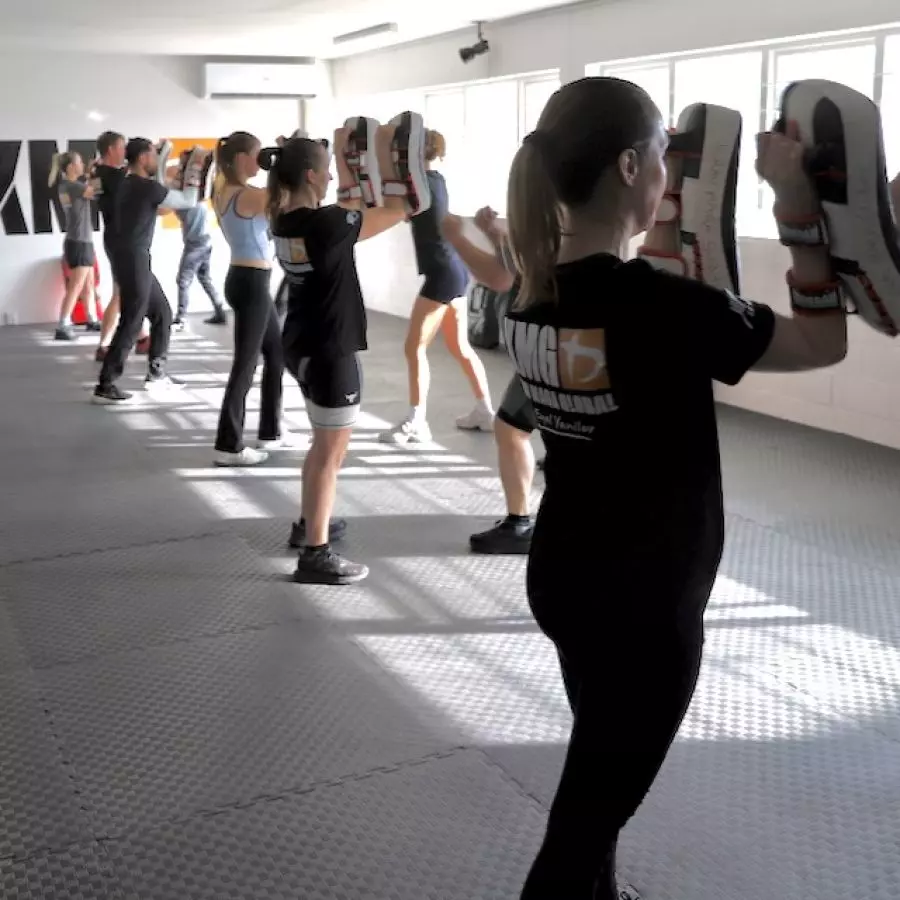
A KMG class — partner drills build skill step by step, then add pressure.
What happens in a typical KMG class?
A KMG class typically draws on the following elements. The emphasis and intensity vary with the lesson plan and the experience of the group:
- Warm-up and movement — getting the body ready and practising stance, footwork and movement.
- Striking — punches, kicks, elbows and knees, usually on pads, building power, accuracy and conditioning.
- Techniques — defences against common attacks such as strikes, grabs, chokes and weapon threats, learned with a partner.
- Drills under resistance — the partner stops cooperating, speed increases, and you start from worse positions.
- Scenarios — putting it together: surprise, fatigue, confined spaces, more than one attacker, protecting someone else.
Instructors explain the real-world situation behind each technique, so training makes sense outside the gym. You train in normal athletic clothes and shoes — no gi or belt.
How is training structured over time?
Training starts with physical skill, then layers in the decision-making. New students begin with striking and movement — building physical skill, fitness and the confidence to defend themselves if they have to. Tactics, dynamic drills, scenarios and the full self-defence timeline (awareness, prevention, de-escalation) are added progressively. That combination is what separates real self-defence from a one-on-one sport.
It's worth separating two things: the order of priority in a real incident — awareness and avoidance first, physical response when it's needed — and the order you learn in, which starts with the physical foundation. See the Krav Maga self-defence timeline for how the stages fit together.
Progress follows the international KMG curriculum — Practitioner (P1–P5), Graduate (G1–G5), Expert (E1–E5) and Master levels — with optional gradings. See KMG levels explained.
Why is training built around how the body reacts under stress?
Because real violence doesn't look like the gym. In class you have space, lighting and a known starting position. In a real assault you may be surprised, crowded, dealing with someone bigger, or already grabbed. Acute stress can raise heart rate, narrow attention and make complex, precisely timed movements harder to perform — though people respond differently.
KMG training is designed around that. It emphasises relatively simple, natural movements, repeated practice and progressively challenging drills to improve the likelihood that students can respond under pressure. Many defences start from the body's instinctive reactions — hands rising to protect the head, turning away from a grab — shaping them into usable defence and counter-attack instead of fighting against them.
Defence and counter-attack are trained to happen together, or with as little gap as possible. In a real assault every extra beat matters: a defender who only blocks is still in danger, so KMG trains students to deal with the incoming attack while immediately disrupting the attacker's next move.
How does KMG train weapons?
Weapon defence is part of the curriculum from the first level, not an advanced specialty. Knife defence, for example, is in Practitioner Level 1. Training is realistic about how dangerous a knife is, and specific about what to do: kick to keep a distant attacker away, use objects around you to block, strike or create a barrier, and at close range deflect the attack and take control of the knife arm. When escape isn't possible, disarming the attacker is the goal — it's what ends the threat. These are high-risk situations, and no technique guarantees safety; training makes the best outcome more likely.
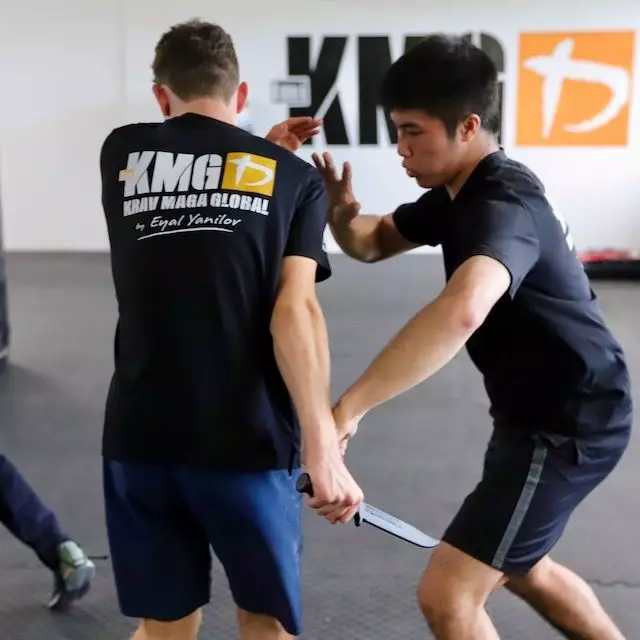
Because KMG is one integrated system, weapon defences use the same core movements and principles as defences against punches, grabs and chokes. For the full picture, see can you actually defend against a knife attack?
How does pressure testing make training usable?
Knowing a technique isn't the same as being able to use it when it matters. KMG classes progressively add the variables that make real situations hard: surprise, a poor starting position, verbal pressure, fatigue, limited space and uncertain timing. That might mean defending from a seated position without warning, working while exhausted, or adapting to confined spaces and low light.
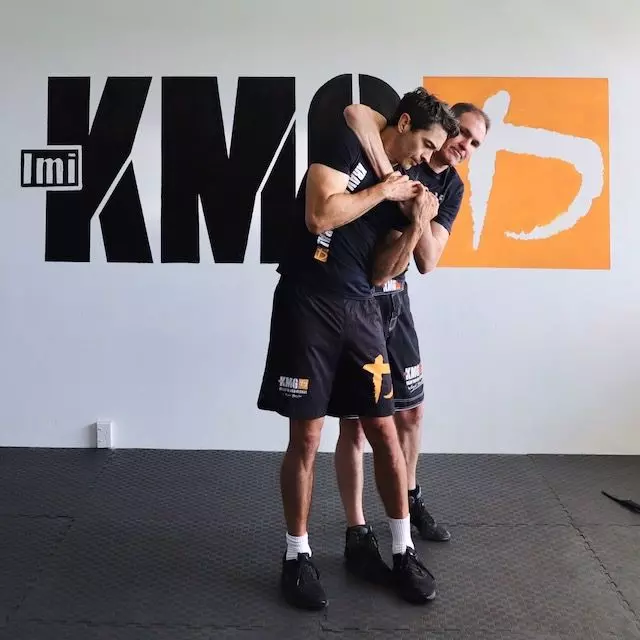
The point isn't to know more techniques. It's to stay functional when conditions stop being cooperative — training as realistically as safety allows.
How do you know the training is the real thing?
A lot of schools use the same words — "realistic", "practical", "street-tested" — while teaching very different things. The markers of serious training are consistent: simple, direct techniques; drills with real resistance and unpredictability; instruction that's realistic about what training can and can't guarantee; and a clear connection to a recognised curriculum with maintained standards.
KMG New Zealand operates within the international Krav Maga Global framework led by Eyal Yanilov, the closest student of Imi Lichtenfeld, the founder of Krav Maga. That relationship determines how instructors are certified, how the curriculum is maintained and how standards are held across the network.
"A self-defence system should be judged by what remains usable under pressure, not by how impressive it looks in ideal conditions."
What people ask about Krav Maga training
A typical KMG class includes a warm-up, striking and movement work (often on pads), techniques against common attacks such as grabs, chokes and strikes, partner drills that add resistance, and scenario work that brings it together under pressure. Instructors explain the real-world situation behind each technique.
Training starts with striking and movement to build physical skill, fitness and confidence. Tactics, dynamic drills, scenarios and the full self-defence timeline — awareness, prevention and de-escalation — are layered in progressively. Progress follows the international KMG curriculum: Practitioner (P1–P5), Graduate (G1–G5), Expert (E1–E5) and Master levels, with optional gradings.
KMG training is built to be as realistic as safety allows. Drills progress from learning the movement to working against resistance, then from disadvantaged positions — surprised, tired, grabbed, in confined spaces, against more than one attacker. The aim is responses that still work when conditions aren't clean.
Yes, from the first level. Knife defence is part of Practitioner Level 1: keeping distance where you can, using objects around you, and at close range deflecting the attack and taking control of the knife arm, with disarming the goal when escape isn't possible. Knife situations are high-risk, and no technique guarantees safety.
No. KMG classes are open to complete beginners, and fitness develops through training. Instructors adjust drills so you can work at your current level.
KMG New Zealand has active clubs in Auckland (North Shore and West Auckland) and Hastings & Napier in Hawke's Bay, with weekly classes open to beginners. If you're elsewhere in New Zealand, you can register your interest on the locations page.
See How a Class Runs
Weekly classes for complete beginners in Auckland (North Shore and West) and Hastings & Napier. No experience needed.
Elsewhere in NZ? Register your interest for a course near you